

Oil‑Injected Rotary Screw Air Compressors in Australia: Sizing, Energy & Maintenance
 By ELGi |
  7 min read | 9 January, 2026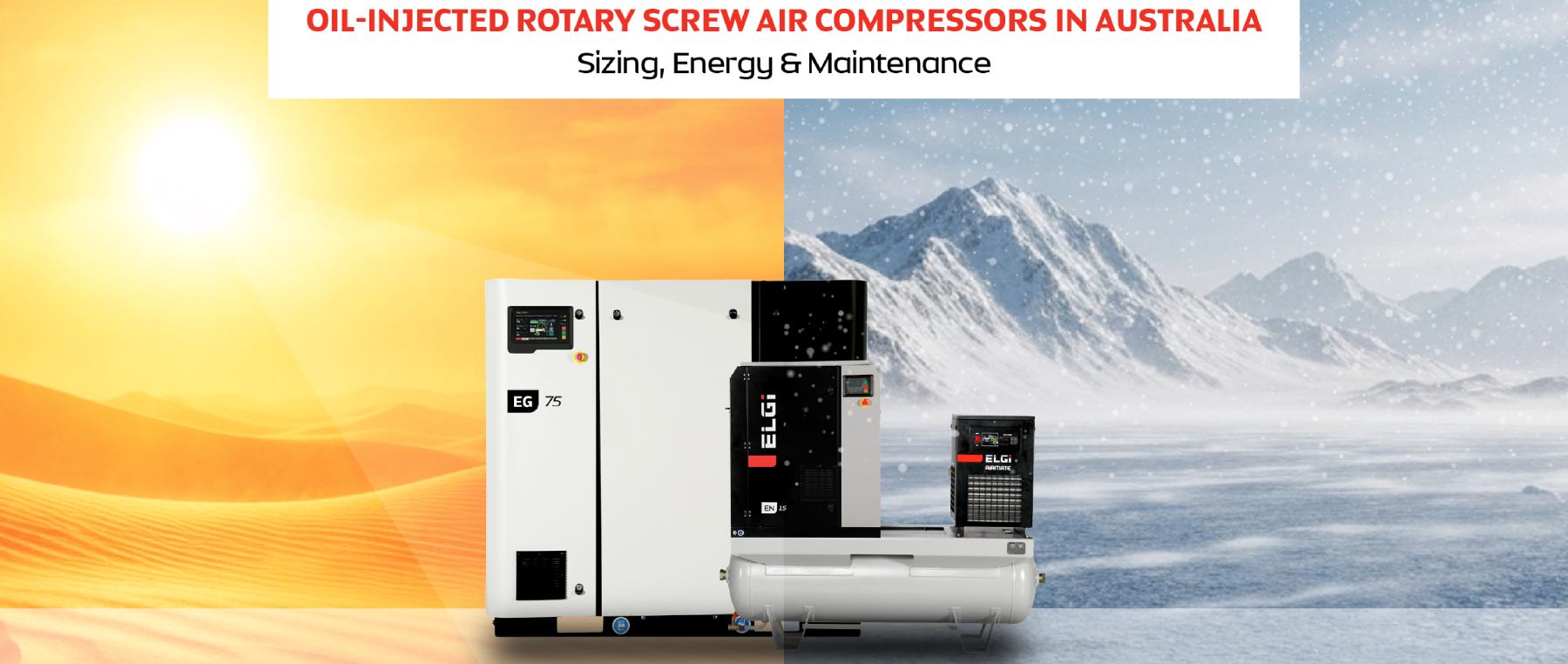
Compressed air systems often hide big costs and risks. In regions with hot, dry, and demanding industrial climates, choosing the right oil-injected rotary screw system can decide if your plant runs profitably or ends up with frequent breakdowns and high bills. Selecting an oil-lubricated screw air compressor early in the project scope helps control life cycle cost, and shortlisting the best rotary screw air compressor for your load profile reduces wasted energy.
In this blog, brought to you by ELGi Australia, you’ll learn:
- The basics of oil-injected screw technology
- When to pick a variable speed drive (VSD) vs a fixed-speed
- How to size a system based on your air demand profile
- Lubrication and filtration strategies for arid or semi-arid conditions
- Service intervals and maintenance insights supported by ELGi’s expertise
Let’s get into it.
Understanding Oil-Injected Rotary Screw Technology
An oil-lubricated screw air compressor (also called an oil-flooded rotary screw compressor) works by injecting oil into the compression chamber. That oil serves three duties: cooling, sealing, and lubrication of the twin screws. After compression, oil is separated via filters/coalescers, cooled, and recirculated.
Why do many industrial operations in hot and demanding environments go with an oil-lubricated screw air compressor? They handle continuous duty well (24/7), cope with fluctuating ambient conditions, and usually offer lower life cycle cost than small reciprocating compressors in heavy-duty roles.
A key point: energy is the lion’s share of operating cost. About 80% of the cost of compressed air generation is spent on energy, far more than the initial purchase or maintenance.
Given the high energy stakes, decisions on control, sizing, and servicing become critical for any air compressor setup. This platform also pairs well with dryers and proper filtration to stabilise downstream processes in food, metals, and packaging.
VSD vs Fixed-Speed: Which Control Strategy Suits You?
For many sites, the control method you pick has a larger impact on an oil-lubricated screw air compressor than the nameplate power.
When choosing a system, a central decision is control: fixed-speed or variable-speed drive (VSD) for the oil-lubricated screw air compressor you select.
Fixed-Speed Units
These run at constant speed regardless of demand. You size them so they handle peak load, and during lower demand, they throttle or unload. Fixed-speed models tend to be simpler, lower capital cost, and reliable in stable demand scenarios.
VSD Units
VSD units adjust motor speed to match real-time demand. When the load is low, they drop speed, reducing throttling losses and cutting energy use. In many compressed air systems, especially with variable demand, VSD systems can reduce energy usage by 25–35% or more. For variable demand, pairing a VSD drive with an oil-flooded rotary screw compressor on the main line gives your oil-lubricated screw air compressor tighter control at low loads.
For example, in industrial setups where air demand fluctuates across shifts or production cycles, a VSD model on your lubricated rotary screw air compressor can pay back its extra capital in energy savings.
However, in very steady high-load operations, the margin for savings shrinks, making fixed-speed a viable alternative. It is wise to run a load-profile analysis to see where the demand lies.
Choosing the best rotary screw air compressor for a mixed-demand profile often involves a lead VSD unit and a trim fixed-speed unit.
Sizing by Demand Profile: Matching Supply to Use
A good compressor purchase is not just about kW or pressure. It is about matching the supply profile to the demand profile for your oil-lubricated screw air compressor.
Step 1: Record Demand Over Time
Collect real demand data across shifts, idle periods, and peak periods. Use metering or logging to see how much flow (m³/min or cfm) you need over time. The shape of that demand curve is your guide.
Step 2: Define Reserve and Diversity
Allow some margin (10–20%) above measured peaks to cover unforeseen surges or future expansion. Multiple compressors may run in parallel to share the load or provide redundancy.
Step 3: Choose Stage and Pressure
Decide if a single-stage unit suits you, or if a two-stage design is better when discharge pressure is high. Also, check if your equipment tolerates small pressure variations. Tighter bands cost more.
Step 4: Evaluate Controls and Sequencing
In multiple-unit setups, sequencing of machines is key. A VSD unit plus a fixed-speed backup is a common pattern: the VSD handles base load, the fixed unit kicks in for peaks.
Sizing mistakes commonly include oversizing or undersizing. Oversizing can waste 10–15% of energy by running compressors in partial load or unload modes.
For multi-shift plants, a lubricated rotary screw air compressor with smart sequencing software supplied by reputable rotary screw air compressor manufacturers can stabilise pressure and trim kWh per m³.
Lubrication & Filtration: What Matters in Harsh Operating Conditions
In hot, dusty, and humid environments, ambient factors can strain lubricants, filters, and separators. Heat, moisture, and airborne particles all demand careful attention to lubrication and filtration strategy for any oil-lubricated screw air compressor.
Oil Choice & Change Intervals
Modern synthetic lubricants help in endurance, extend intervals, reduce degradation, and improve sealing. Many users now stretch service intervals between oil changes thanks to improved formulations. On an oil-flooded rotary screw compressor, oil selection affects seal integrity and rotor life, while oil-flooded screw compressors depend on clean intake air to keep separators performing as designed.
Oil Separation & Coalescing
High-grade separators are critical to prevent oil carryover into the compressed air. Poor separation can overload downstream filters in oil-flooded screw compressors. Choose effective coalescing filters, possibly staged before and after dryers.
Air Intake Filtration
Protect the compressor. Fine dust or salt-laden air in coastal or mining sites demands multistage filters (pre-filter, fine filter) and periodic replacement. Clean intake air extends component life and reduces contamination load on lubricant filters.
Condensate and Drainage
Condensate needs careful handling. In many oil-flooded screw compressors, condensate contains entrained oil, which must be treated per environmental rules. Using zero-loss drains helps avoid wasting compressed air.
Maintenance & Service Intervals for Australian Conditions
Correct servicing guards against downtime, high costs, and unreliable performance. Australian conditions (temperature swings, dust, humidity) demand close attention for any oil-lubricated screw air compressor.
Typical Intervals:
- Daily or weekly checks: oil levels, indicator lights, belt tension, leaks
- Monthly or quarterly inspections: intake filters, condensate drains, safety devices
- Every 3,000–5,000 hours (or annually): oil & filter change, separator change, inspect bearings, belts, valves
- Every 10,000–20,000 hours: overhauls such as rebuilding the air end, replacing seals, and inspecting major components
These intervals may vary based on duty cycle and environment. Log every service so trends can warn you before failure.
Partnering with rotary screw air compressor manufacturers that keep parts locally stocked shortens downtime. They also help verify that your selection still reflects the best rotary screw air compressor for the present load shape.
Many operators, therefore, prefer working with experienced rotary screw air compressor manufacturers that offer fast parts access and local service teams.
ELGi: Supporting Industries with Smarter Solutions
At ELGi, we design and supply a wide range of oil-lubricated screw air compressors built for demanding operating conditions. Our portfolio covers both fixed-speed and VSD models, engineered to deliver consistent performance in harsh environments.
What sets us apart is not just product range, but service:
- Nationwide service and support network across regions
- Genuine spare parts for long-term reliability
- Warranty programs that protect your investment
- Expertise in energy audits and life cycle cost analysis
- Proven experience across industries such as mining and food processing
For sites that depend on compressed air every day, ELGi pairs global engineering with local service capability, giving you confidence in both uptime and cost control.
Summary & Guidance for Operators
Here’s a quick checklist:
- Energy is the biggest cost in compressed air systems (often ~80%)
- Choose a control strategy (VSD vs fixed) according to how variable your demand is
- Size based on a measured demand curve, not guesswork
- Use high-quality lubrication and separation systems for Australia’s heat and dust
- Adhere to maintenance schedules and log all work
- Shortlist lubricated rotary screw air compressor options with strong service support in Australia
For many businesses, a well-selected oil-lubricated screw air compressor or oil-flooded screw compressors will run reliably for 10 to 15 years with lower downtime and lower cost.
Call to Action

The Economics of Running Rotary Screw Air Compressors Australia: Cost, Maintenance & Lifecycle Value
Introduction Rotary Screw Air Compressors sit at the centre of many industrial operations...
9 min read 
The Benchmark for Performance: What Defines the Best Industrial Air Compressors in Australia Today
If the compressed air supply stopped for ten minutes on a production site, the impact woul...
7 min read 
Best Practices for Maintaining Oil-Flooded Screw Compressors in Australia’s changing climatic conditions
Australia’s industrial operations rely on compressed air systems that can perform consis...
1 min read 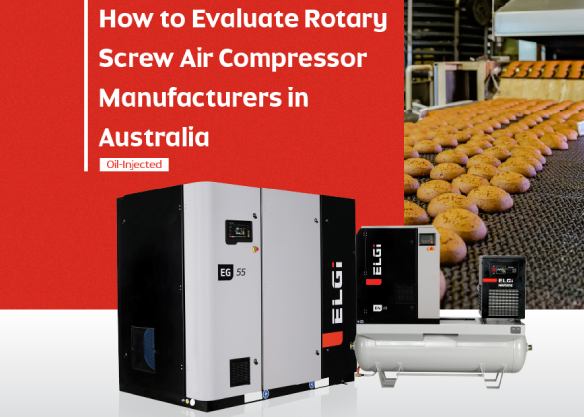
How to Evaluate Rotary Screw Air Compressor Manufacturers in Australia (Oil‑Injected)
Choosing the right oil injected rotary screw air compressor manufacturer in Australia can ...
6 min read 
Why is it Essential to Treat Wastewater?
The very subsistence of life depends on water - plants, anim...
4 min read 
How Waterford Crystal Modernized Tradition with ELGi’s EG Series Compressors
Waterford Crystal, a leader in luxury crystalware, partnered with ELGi to integrate EG Ser...
1 min read 
How ELGi’s EG Series Air Compressors are Revolutionizing Building Products Manufacturing in Australia
A premier Australian building products manufacturer has transformed their operational effi...
1 min read 
How Compressed Air Fuels Efficiency for the Automotive Industry
This case study explores how a leading fuel management syste...
1 min read 
How ELGi’s Compressors Are Powering Efficiency in the Garment Industry
This case study explores how ELGi’s air compressors are tr...
2 min read 
How ELGi’s EG Series Air Compressors are Empowering Precision Milling in Europe’s Composite Tooling Industry
This case study showcases how a leading composite tooling ma...
1 min read