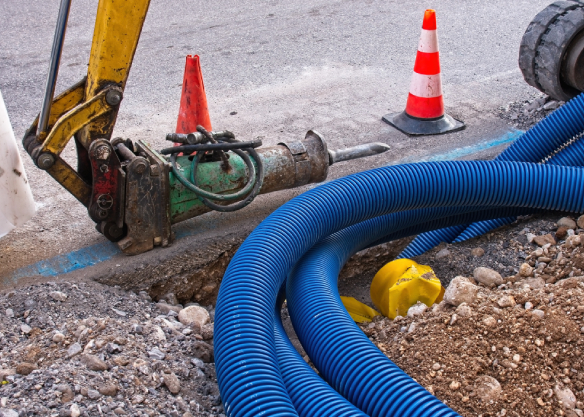
What used to be above is now below. Many of the key components of infrastructure — energy, telecommunications, wastewater and transportation — are being installed underground through trenchless work, and portable air compressors are crucial to success.
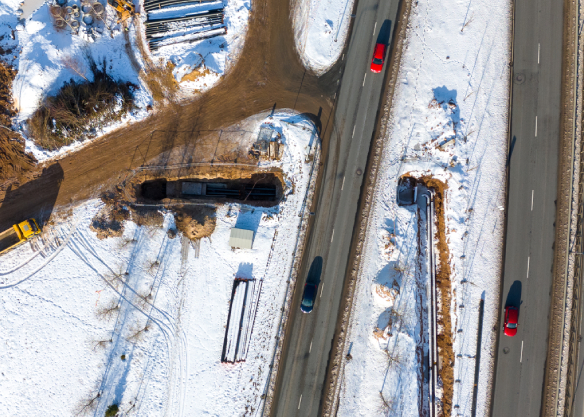
Trenchless work is the installation or repair of underground infrastructure without the need for open, continuous trenches. Basically, without digging. Instead, specialized equipment enters small surface access points, allowing roadways, businesses and the environment to remain undisturbed.
These applications include horizontal directional drilling, pipe bursting, micro-tunneling, auger boring, fiber optic cable blowing, cured-in-place piping and more. It’s widely used in the infrastructure, utility and telecom industries.
Trenchless has advantages over open-cut excavation. It has minimal service disruption, which is ideal for roads, sidewalks and landscape areas. It also provides faster installation, quicker cleanup, improved safety and lower environmental impact.
Air compressors play a valuable role in trenchless work. They power tools and drills, cure liners, blow fiber through ductwork and much more. Trenchless operations depend on reliable air flow, stable pressure and reliability. The best air compressors are easy to transport, both on and off the job site, ruggedly durable and fuel efficient.
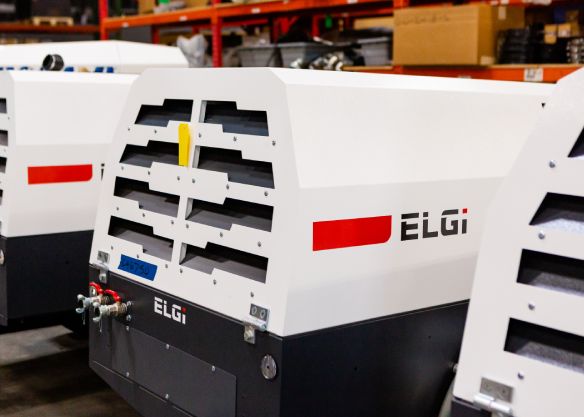
ELGi portable air compressors are ideal for trenchless work and have proven themselves on job sites around the world over several decades of success. Not only do they meet these strict job requirements, they also offer low noise and small footprints on the jobsite. The following are some of the applications that rely on ELGi air compressors.
Cured-in-place piping (CIPP)
CIPP is a trenchless rehabilitation method used to repair existing pipelines — an increasingly popular solution in sewer and water line infrastructure. This process involves inserting a resin-saturated felt liner into the existing pipe, then curing it in place using hot air, steam or UV light.
Compressed air plays a key role during several stages of CIPP. It’s used to invert the liner into place and then to maintain pressure during the curing process. This requires steady, reliable airflow and stable pressure to ensure the liner fully conforms to the host pipe and cures properly without wrinkles or air pockets.
ELGi compressors, like the D400T4F, offer dependable CFM and PSI performance to meet the demands of both inversion and curing. Their fuel efficiency and portability make them well-suited to trenchless work that may span multiple locations. A low-noise, low-emission footprint also supports CIPP jobs in urban or environmentally sensitive areas.
Fiber-optic cable installation and blowing
As high-speed internet infrastructure expands, the installation of fiber-optic cables using cable blowing techniques is becoming increasingly common in underground utility corridors and conduits. Cable blowing uses compressed air to propel fiber cable through long distances of ductwork — a method prized for speed, safety, and reduced mechanical strain on cables.
For this application, air compressors must deliver high air volume with very stable pressure. Clean, dry air is essential to avoid moisture that could damage sensitive fiber components or interfere with blowing equipment.
The ELGi GP35FP compressor is specifically designed for fiber-optic cable blowing, delivering the precise air volume and pressure needed for rapid installation in both urban and remote areas. Its compact, towable design simplifies deployment in tight spaces, while features like low noise, emissions compliance, and integrated moisture control ensure optimal performance for sensitive fiber installations.
Horizontal directional drilling (HDD)
This method of installing pipes and conduits along curved or angled paths below roads, rivers and other obstacles is used by the telecom, energy, power line, water and sewer industries.
Compressed air is used to power downhole tools, cool and clean drill heads and flush bore paths. High CFM and consistent PSI are needed for these applications. Air compressors also need to be highly portable to reach job sites and maneuver within them. The terrain is typically rough, so compressors need to be rugged.
ELGi compressors such as the D400T4F are fuel-efficient, reliable under pressure, and well-suited for extended horizontal directional drilling projects.
Pipe bursting
This method replaces old pipe by fracturing it (breaking it apart) and simultaneously pulling new pipe into its place. Crews can even replace old pipes with larger ones for increased flow capacity without digging a trench.
Pipe bursting is most often seen in the sewer/water utilities, as well as industrial infrastructure. The compressed air powers the hydraulic or pneumatic bursting rings. Consistent PSI is needed to avoid equipment misfires. It’s also a high-duty-cycle operation, which demands reliability from an air compressor.
ELGi compressors like the D300T4F are mobile, easy to tow, and deliver stable air output ideal for continuous pipe bursting and pulling operations.
Auger boring
Highway and rail construction, as well as pipeline crossing, rely on auger boring. It pushes a steel pipe while a rotating auger removes soil. Here compressed air is used for ventilation, spoil clearing and support tools.
The most important characteristics for air compressors in this application are a compact size for pit work, quiet operation, and portability — especially in congested or hard-to access jobsites.
The ELGi D185T4F is an efficient and maneuverable compressor, making it a strong fit for auger boring projects where space is limited and reliable air is needed to support auxiliary systems like ventilation, spoil removal, or pneumatic tools. Delivering up to 185 CFM at 100 PSI, it provides consistent performance in pit environments and is easy to tow and position alongside boring rigs in tight or congested worksites.
Microtunneling
Microtunneling is a precision trenchless method used in urban infrastructure, rail, and utility projects where minimal surface disruption and exact alignment are critical. A remote-controlled tunnel boring machine (TBM) is used to install pipelines while simultaneously jacking pipe segments into place. Compressed air plays a vital role in this process — helping to maintain pressure at the cutting face, remove spoil material, and support ventilation and auxiliary systems.
For this application, compressors must deliver high CFM and stable PSI over extended periods, often in challenging underground environments. Moisture control and the ability to integrate with continuous-duty operations are also key.
A compressor like the ELGi D400T4F is ideal for microtunneling. It is capable of delivering 425 CFM at 100 PSI and offers the power and reliability needed for TBM operation and support systems. Its rugged construction makes it well-suited for high-precision, high stakes underground work.
Pipe Piercing
Pipe piercing is a trenchless installation technique used to create a path for new pipelines, particularly in tight corridors like streets or residential areas, by hydraulically pushing a perforating head through soil. As the head advances, it creates a tunnel, allowing a new pipe to be pulled directly behind it, all without disrupting the surface above.
Compressed air plays a key supporting role in pipe piercing operations. It’s used to power hydraulic pumps, dust suppression systems, and ventilation setups within the entry pit. Steady airflow and pressure help maintain clean, safe working conditions during installation.
Compressors for pipe piercing need to be, robust and portable enough to move between confined access points. They should maintain consistent PSI under load for hydraulic power. They need to be durable in dusty, abrasive environments.
North America-ready models like the D185T4F and D300T4F are ideally suited for pipe piercing. The D185T4F delivers 185 CFM at 100 PSI from a compact, towable package — perfect for tight pit setups. For larger or longer piercing operations that require more flow, the D300T4F offers higher CFM while still meeting the PSI demands. Both units are built to handle dust and debris, making them reliable partners for clean, efficient pipe piercing jobs.
Backed by ELGi
ELGi air compressors are truly ideal for trenchless work. They have been proven over the long haul, with decades of reliable operation on jobsites around the globe. They are designed and built to handle the rigors of working underground, shift after shift — from dust and moisture to extreme temperatures.
ELGi’s proprietary air-end designs deliver higher efficiency and longer life, generating clean, moisture-free compressed air even in the toughest conditions. ELGi and its distribution partners act quickly, with fast quote turnarounds and small-team responsiveness that help underground construction projects stay on time and on budget.


 5 min read