Success starts with understanding your needs, then choosing the right air compressor to get the job done. A few key measurements will make that choice much easier.
What industry do you work in? What do you need compressed air for? How much air volume (CFM) do your tools require? How powerful does the air pressure (PSI) need to be? How clean is the air required? What tools will you be running? Do you need air in short bursts or for longer, sustained tasks?
Answering these questions first leads to better efficiency, smoother operation, fewer delays and more uptime.
ELGi works with distributors, rental fleets and contractors to match rugged, reliable machines to the specific demands of each job. The process should be collaborative, with minimal guesswork. Once you know the application, a few measurements narrow the search.
"The right compressor starts with the right questions. If you focus on what the job demands first the specs will fall into place. That’s how you get the best match for performance, efficiency and uptime," said Zeke Hendrix, vice president of ELGi Portables.
Understanding CFM and PSI
CFM (Cubic Feet per Minute) measures air volume — how much air flows from the compressor each minute. High-demand tools like pavement breakers, rock drills or spray guns need more CFM to run at full power. Too little and tools will be sluggish, stall or stop working altogether.
PSI (Pounds per Square Inch) measures air pressure — the force of air into your tools. Impact wrenches, sandblasters and other high-pressure tools need more PSI to work properly.
For proper sizing, CFM and PSI must both meet the tool’s needs. You can’t make up for a shortage in one with more of the other.
Sizing tips:
- List all the tools you’ll run at the same time.
- Add up their total CFM requirements.
- Add a 20% buffer for safety.
- Match the compressor’s PSI rating to the tool that needs the highest pressure.
"Think of CFM as the volume of air and PSI as the muscle behind it. You need both in balance to get tools working at their best — you can’t make up for a shortage in one by having more of the other," Hendrix explained.
Conditions that change the equation
Elevation can affect CFM and PSI needs. Higher altitudes require derating (running below maximum capacity) to maintain reliability and safety.
Climate also plays a role, though less than elevation.
"A compressor that’s perfect at sea level might be underpowered in the mountains. Elevation, temperature and humidity all matter — and a knowledgeable partner will factor those in before recommending a unit," Hendrix said.
Risks of the wrong size
Too small: tools stall, underperform or get damaged.
Too large: wasted fuel, higher maintenance costs and shorter life.
"An undersized compressor can bring a job to a standstill. An oversized one will cost you more than it earns," Hendrix said. "The sweet spot is matching the machine to the job — and that starts with a clear understanding of your needs."
One compressor, many jobs
A single compressor can handle multiple applications if you start with the toughest job, then balance for efficiency.
Choose a higher-CFM unit with a wide PSI range or a variable-speed compressor if available. In some cases, multiple smaller units or a dual-mode compressor offer better efficiency and flexibility.
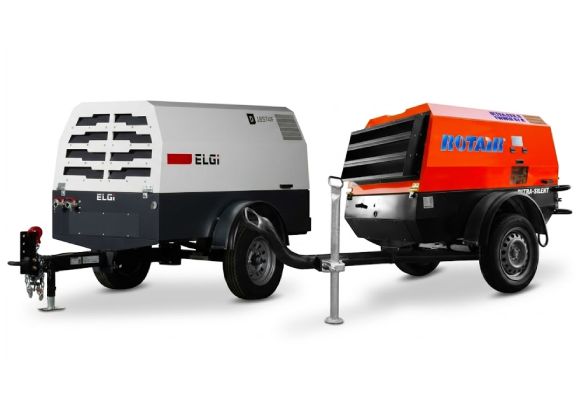
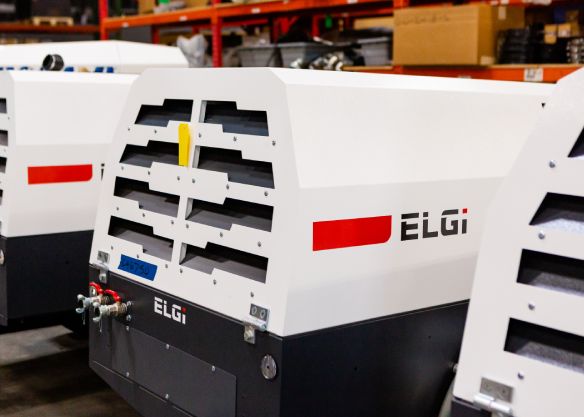
The ELGi D185T4F is a versatile choice, delivering 185 CFM at 100 PSI, available in trailer or skid-mount versions.
Five questions to ask before choosing a compressor:
- What tools will I be running, and how many at once?
- What’s the most demanding tool in the set?
- How long will the compressor run each day?
- Where will I be working — at what elevation and in what climate?
- Will this compressor handle future jobs with different requirements?
"When you match a compressor to the realities of your work, you’re not just buying a machine — you’re investing in uptime, efficiency and the confidence that your tools will deliver every time," Hendrix concluded.



 5 min read