

Direct Expansion Refrigerated Dryers: Preventing Costly Downtime with Proven Moisture Control Technology
 By ELGi |
  8 min read | 24 November, 2025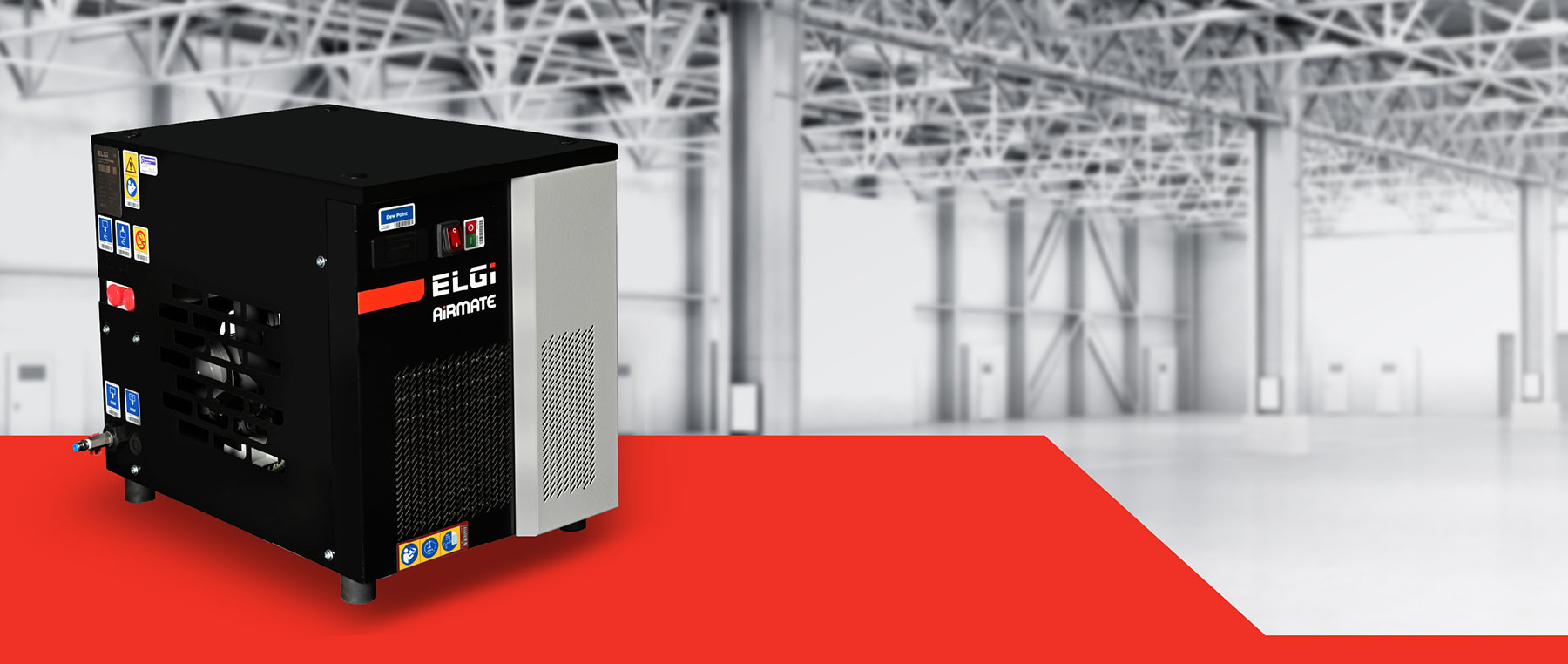
Maximising efficiency and reliability in compressed air applications by converting untreated air into a dependable industrial utility
In the world of industrial compressed air systems, moisture is the silent saboteur that can compromise equipment performance, product quality, and operational efficiency. While compressed air serves as the fourth utility in manufacturing environments worldwide, the presence of water vapor in pneumatic systems poses significant challenges that demands immediate attention.
Atmospheric air naturally carries humidity in the form of water vapor, which condenses into liquid under varying temperature and pressure conditions. When this air undergoes compression to typical operating pressures of 6-10 bar, the relative humidity increases dramatically, often reaching saturation levels that guarantee condensation as the compressed air cools in distribution systems. The solution lies in implementing appropriate compressed air drying technology. With this as an imperative for the vast majority of industrial applications, Direct Expansion refrigerated dryers represent the optimal balance of performance, reliability, and economic value.
The Hidden Costs of Wet Compressed Air: Corrosion, Contamination, and Failure
Understanding the necessity of compressed air drying begins with recognising the inevitable physics of compression. In compressed air systems, moisture poses serious risks—corroding pipelines, damaging air-powered equipment, and introducing impurities into processes. It also compromises product quality and promotes microbial contamination, particularly in industries where compressed air purity is critical. Moisture removal serves as the primary defence mechanism against cascading system failures. Untreated compressed air carrying excessive moisture content creates an environment conducive to widespread corrosion throughout pneumatic networks. This corrosion affects not only primary distribution piping but also extends to precision components, including control valves, actuators, instrumentation, and end-use equipment.
The corrosion process generates more than structural damage; it produces rust particles, scale, and metallic debris that becomes entrained in the air stream, transforming the compressed air system into a distribution network for contamination. These particles can damage precision equipment, interfere with process controls, and compromise t he performance of pneumatic tools and machinery.
Contamination risk mitigation extends beyond equipment protection to product quality assurance. In industries where compressed air comes into direct contact with products – food and beverage processing, pharmaceutical manufacturing, paint finishing, and electronics production – moisture-related contamination can result in catastrophic quality failures. For example, consider the automotive industry, where compressed air powers painting systems and assembly line pneumatics. Moisture contamination in paint finishing applications creates surface defects, poor adhesion, and coating failures that require costly rework.
Overview of Compressed Air Dryer Technologies
The compressed air treatment industry has developed multiple technological approaches to moisture removal, each designed to address specific performance requirements, operating conditions, and economic constraints.
Refrigerated Dryer Systems: The Industry Standard
Refrigerated dryers dominate industrial compressed air applications due to their proven reliability, moderate initial costs, and ability to achieve pressure dew points suitable for most applications.
- Direct Expansion (Non-Cycling) systems represent the most straightforward approach to refrigerated drying. These units operate continuously, maintaining consistent refrigeration circuit operation regardless of load variations. The refrigeration system runs constantly, providing stable cooling capacity and predictable moisture removal performance through an efficient two-stage cooling process.
- Thermal Mass (Cycling) dryers incorporate thermal storage media to maintain cooling capacity during periods when the refrigeration compressor is off. This approach reduces energy consumption by allowing intermittent compressor operation while maintaining effective moisture removal through stored thermal capacity.
- Variable Speed Drive (VSD) cycling units represent the most advanced refrigerated dryer technology, employing electronic controls to modulate refrigeration capacity based on real-time demand signals. These systems continuously adjust cooling capacity to match actual moisture loading, optimising energy efficiency while maintaining required outlet conditions.
Desiccant Dryer Systems: Ultra-Low Moisture Applications
For applications requiring extremely low moisture levels – specifically, pressure dew points of -20°C or lower – desiccant technology becomes necessary. These systems utilise moisture-absorbing materials to achieve ultra-dry compressed air conditions impossible with refrigerated systems.
- Heated desiccant dryers employ external heat sources for desiccant regeneration, providing consistent ultra-low moisture levels with predictable operating costs.
- Heatless desiccant systems utilise purge air for desiccant regeneration, eliminating external energy requirements but consuming approximately 15-20% of the dried compressed air output for regeneration purposes.
Inferior parts can compromise system efficiency, causing higher energy consumption and greater emissions over time.
The Compelling Case for Direct Expansion Refrigerated Dryers
Among the many compressed air drying technologies available today, Direct Expansion refrigerated dryers stand out for their simplicity, reliability, cost-effectiveness, and performance. These systems are the preferred choice for nearly 80% of industrial compressed air applications—and for good reasons.
1.Simplified Design = Reliable Operation
The strength of Direct Expansion dryers lies in their minimalism. With fewer moving parts and no unnecessary complexity, they deliver consistent performance and ease of use.
- Straightforward circuit : Comprising of a hermetic compressor, air-cooled condenser, expansion valve, and air-to-refrigerant heat exchanger—all familiar to maintenance teams.
- No complex controls : Eliminates the need for thermal mass storage, advanced electronics, or variable-speed drives.
- Fewer failure points : The simple design translates to lower risk of malfunction and easier troubleshooting.
- Consistent uptime : Facility managers can depend on steady, predictable operation.
2.Familiar Components = Easy Serviceability
Direct Expansion dryers are built using standard refrigeration components, making maintenance simple and accessible.
- No specialised training needed : Most technicians are already equipped to service these systems.
- Quicker repairs : Readily available parts and standard tools ensure faster maintenance and reduced downtime.
- Routine-friendly : Cleaning, refrigerant checks, and drain inspections are straightforward tasks for in-house teams.
3.Lower Life Cycle Cost = Smart Investment
Direct Expansion dryers don’t just save on day-to-day operations—they also offer long-term financial advantages.
- Reduced maintenance expenses : No proprietary parts or complex software systems to manage
- Easier parts sourcing : Standardised components mean faster replacement and lower procurement costs.
- Broad technician availability : Most air compressor and HVAC service providers can handle Direct Expansion systems, keeping service costs competitive.
4.Energy Efficiency = Better Than You Think
Contrary to assumptions, continuous operation doesn’t mean energy waste.
- Steady-state efficiency : Direct Expansion dryers avoid the frequent starts, stops, and thermal losses seen in cycling dryers.
- Lower total consumption : When accounting for auxiliary control loads and cycling inefficiencies, Direct Expansion systems often come out ahead.
5. Maintenance Made Easy
Built with serviceability in mind, Direct Expansion dryers are ideal for environments where minimal downtime and fast upkeep are essential.
- No special equipment required: Maintenance can be done with basic tools and minimal system shutdowns.
- Key tasks include:
- Cleaning condensers
- Inspecting condensate drains
- Verifying refrigerant charge
- General system checks
Reliable Dew Point = Consistent Compressed Air Quality
Direct Expansion dryers are engineered to maintain a stable pressure dew point of 3-5°C (37°F)—perfect for most indoor industrial uses.
- Prevents condensation : Safely manages moisture in environments above 3°C, covering nearly all plant conditions.
- Suits diverse applications : From general plant air to instrument and process air (with added filtration as needed).
- Desiccant not required : Unless ultra-low dew points are necessary, Direct Expansion dryers are more than sufficient.
Advanced Features Enhancing Performance
Contemporary Direct Expansion dryers incorporate sophisticated features that maximise efficiency and reliability:
- Zero-loss auto drain valves automatically discharge condensate without compressed air waste associated with traditional timed drain systems.
- High-efficiency stainless steel evaporators utilise corrosion-resistant brazed plate heat exchangers that deliver long-lasting performance and consistent cooling. These components resist corrosion and provide superior heat transfer compared to traditional copper tube designs.
- Compact, space-saving designs enable wall-mounting capabilities, fitting seamlessly into tight industrial setups ideal for workshops and small production floors.
Environmental Stewardship Through Advanced Refrigerant Technology
Modern Direct Expansion dryers incorporate environmentally responsible refrigerant technologies that align with global sustainability initiatives and regulatory requirements.
R513a refrigerant represents the progressive choice for new installations and equipment replacement projects. This advanced refrigerant offers a Global Warming Potential (GWP) of approximately 630, representing a significant reduction compared to traditional alternatives like R134a with its higher GWP rating. The lower GWP rating directly translates to reduced CO2 equivalent emissions throughout the equipment lifecycle. R513a provides performance characteristics similar to traditional refrigerants while offering enhanced environmental compatibility, ensuring that environmental responsibility does not compromise system performance.
Strategic Implementation Guidelines
Successful Direct Expansion dryer implementation requires careful consideration of system sizing, installation requirements, and integration with existing compressed air infrastructure.
Proper sizing ensures optimal performance and energy efficiency. Dryer capacity must align with actual compressed air flow requirements while accounting for ambient temperature variations, inlet air temperature, and moisture loading conditions. Modern Direct Expansion dryers accommodate diverse industrial applications.
Installation positioning significantly impacts system effectiveness. Locating dryers downstream of air receivers provides temperature stabilisation, flow smoothing, and condensate separation benefits. Adequate ventilation around the dryer ensures efficient heat rejection from the air-cooled condenser.
The Practical Choice for Industrial Excellence
Direct Expansion refrigerated dryers represent the most practical and cost-effective solution for industrial compressed air drying requirements. Their unique combination of design simplicity, operational reliability, and economic value makes them the logical choice for facilities seeking dependable moisture removal without unnecessary complexity.
The technology successfully addresses fundamental compressed air moisture challenges while providing consistent performance that industrial operations demand. Modern Direct Expansion systems incorporate advanced features like zero-loss drainage, hot gas bypass control, and environmentally friendly refrigerants, ensuring complete moisture elimination with minimal environmental impact.
For the overwhelming majority of compressed air applications, Direct Expansion dryers deliver the moisture removal performance necessary to protect valuable equipment, ensure consistent product quality, and maintain operational efficiency – all while keeping total cost of ownership manageable and maintenance requirements straightforward. In an increasingly complex industrial environment, Direct Expansion technology continues to prove its value through consistent, dependable performance that protects operations and investments.
Similar topics
The Right Air Compressor Setup for Workshops, Tools & Repair Stations
Ever had a workshop day where tools suddenly feel off? The impact wrench hits softer. Th...
8 min read 
Oil-Injected vs Oil-Free Screw Air Compressor – How to Choose for Industrial Loads
When a plant runs three shifts, compressed air quietly controls how smoothly production ...
8 min read 
5 Technical Parameters To Compare Between Leading Screw Compressor Manufacturers
Choosing the right screw air compressor can often feel like stepping into a candy store ...
8 min read 
Screw Air Compressor vs Piston Compressor: Which Setup Fits Continuous Duty Cycles?
What happens when your production floor needs compressed air that never stops flowing? ...
7 min read 
Reciprocating Compressors: Working Principles, Components & Use Cases
A practical guide to reciprocating compressors, explaining how they work, their key comp...
9 min read 
Air Compressor Troubleshooting: A Comprehensive Guide to Rapid Problem Resolution
In modern industrial operations, compressed air systems function as critical utilities t...
8 min read 
A Maintenance Manager’s Guide to Making the Right Compressor Decision
When one call sets your uptime, spend, and risk profile Every maintenance leader meet...
2 min read 
The Efficiency Paradox and Customer Expectations in Compressed Air: Not Only a “Pressure” Matter
About the whitepaper In many industrial facilities, increasing operating pressure is se...
3 min read 
Exploring Water-Injected Screw Technology for Reliable Oil-Free Compressed Air
Oil-free compressed air is central to quality and safety across pharma, food, beverage, an...
2 min read 
Tips for Smooth Operation and Reduction of Operating Costs of Compressed Air Systems
About the Webinar Join ELGi’s compressed air experts as they share proven strategies to...
2 min read