

5 Technical Parameters To Compare Between Leading Screw Compressor Manufacturers
 By ELGi |
  8 min read | 10 March, 2026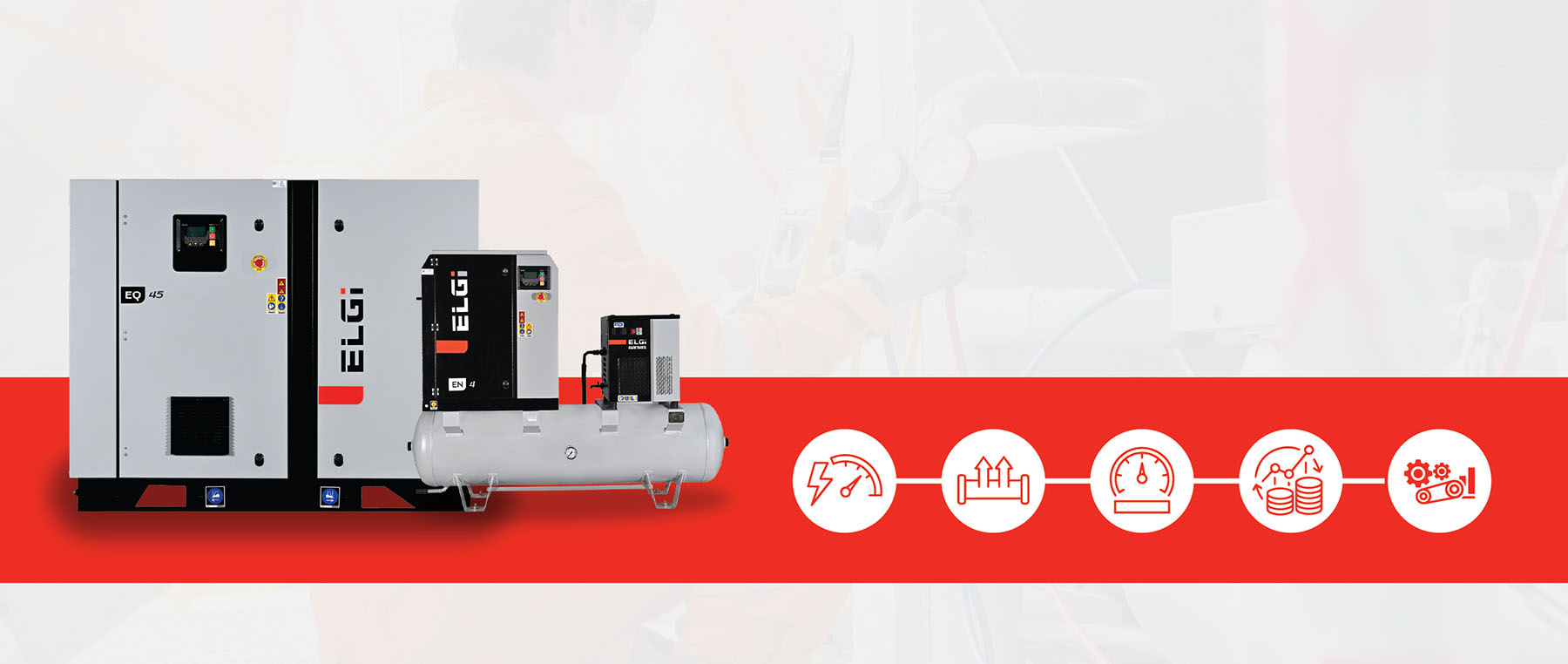
Choosing the right screw air compressor can often feel like stepping into a candy store filled with endless jars.
Everything looks attractive, and every option claims to deliver the best results. But what truly separates a reliable machine from an average one is not the price tag. It is not even the brand name. The real difference lies in technical performance, which directly affects uptime, operating costs, and overall productivity.
A screw air compressor is more than just a machine running on the shop floor. In modern plants, rotary screw air compressors form the backbone of continuous compressed air supply by powering tools, production lines, and critical pneumatic systems without interruption. Rotary screw compressors help maintain stable compressed airflow even during peak production hours.
When you compare options from leading screw compressor manufacturers, small technical details often make the biggest difference in real-world performance.
In this blog, we will walk through the five most important technical parameters you should examine to help you make a confident, future-ready investment decision.
What Is a Screw Air Compressor?
A screw compressor is an industrial machine built to supply a steady and continuous stream of compressed air. It works using two rotating helical screws that pull air inside, compress it in a smooth motion, and release it at a consistent pressure level.
Piston compressors switch on and off repeatedly, but screw air compressors are made to run for long hours without interruption. They create less vibration, maintain stable output, and deliver reliable performance throughout the day.
Many industries use oil-lubricated screw air compressors because they stay cooler during operation, offer a longer service life, and perform efficiently even under constant demand.
Because of these advantages, rotary screw air compressors are widely used in manufacturing setups where a continuous and dependable compressed air supply is critical for smooth operations.
Why Technical Parameters Matter More Than Brand Names
In real-world industrial use, energy consumption becomes the biggest cost factor. Nearly 70% to 75% of a compressed air system’s total lifetime expense comes from power usage, while purchase and maintenance costs make up only a smaller share.
That is true. Even if a screw air compressor looks affordable at the start, poor performance or high energy use means you will keep paying for it continuously, every hour of the day, and throughout its entire working life.
Five Important Technical Parameters
Parameters such as energy efficiency, reliability, and noise control are especially important when selecting a low-noise screw compressor for manufacturing operations.
1. Energy Efficiency
Efficiency plays a major role in industrial compressed air systems. Simply knowing how much power a screw air compressor motor consumes is not enough. This is very important when evaluating rotary screw air compressors, as their design efficiency directly affects specific power, energy consumption, and long-term operating costs in continuous-duty environments.
Key metrics to check: Specific Power measured in kW per m³ per minute of compressed air. A lower value always indicates better performance.
Why It Matters
- A compressor with a low specific power uses less electricity while delivering the same amount of compressed air, which directly improves overall efficiency.
- When equipment runs year after year, energy-efficient compressors can save thousands in electricity bills and often recover their initial cost faster than expected.
2. Reliability & Lifetime Performance
When you choose a new screw air compressor, especially an oil-lubricated screw compressor for continuous duty, what you are really investing in is the steady uptime. Every minute of downtime means lost production time, delayed deliveries, and added pressure on your team.
Well-designed oil-lubricated screw air compressors support continuous operation by reducing wear, managing heat efficiently, and maintaining consistent performance over long production cycles. In heavy-duty rotary screw compressors, this directly results in fewer breakdowns and more predictable uptime.
Leading manufacturers build their compressors to last by focusing on long-term performance, not just short-term output. Their designs usually include:
- Strong and durable air end construction
- Slow-running air ends
- High-quality bearings and seals
- Efficient cooling and lubrication systems
- Components that are tested for long service life
A solid engineered option like the ELGi EN Series screw compressors, offered in power ranges from 2.2 to 15 kW, provides dependable performance that helps operations run smoothly day after day.
Look for verified performance standards, such as the BCAS Verification Program, and independent test data when comparing reliability claims between brands. Trusted organizations such as the British Compressed Air Society in Europe, or CAGI in the US, publish third-party performance verification for rotating compressors, helping buyers make informed decisions.
3. Noise Level and Operational Comfort
Sound is often treated as a secondary factor when evaluating compressed airflow and power output. However, in indoor workshops and production areas where equipment runs for extended hours, noise becomes a constant operational concern. It has a direct impact on worker comfort, concentration, and overall efficiency on the floor.
Many screw air compressors operate quietly within the 60 to 65 dBA range, while others can be louder during regular use. Choosing a low-noise screw compressor helps create a safe and calm work environment. It allows teams to communicate easily, reduces listening fatigue, and lowers the need for extra soundproofing.
This matters even more in places like small fabrication units, automotive service centers, or busy manufacturing floors where people and machines work close to each other throughout the day.
4. Operating Pressure Range & Performance Stability
Two compressors may show similar compressed airflow numbers on paper, but one may continue to perform smoothly at higher pressures without heating up or losing efficiency. This kind of steady performance is exactly what is needed in demanding industrial environments.
When you compare manufacturers, make sure you ask these questions:
- What is the highest working pressure the compressor can handle regularly?
- Can it deliver consistent performance when pressure levels change?
- Does it include pressure control systems such as unloader valves or VSD-based pressure matching?
Manufacturers that clearly explain pressure performance through detailed curves or provide advanced control features usually deliver more reliable and stable operation across different use cases.
5. Maintenance Accessibility & Lifecycle Costs
No compressor can run for years without regular servicing. However, how easy that service is and how much it costs can differ a lot between well-known screw compressor manufacturers.
Here are a few important things you should look at:
- How simple it is to replace filters
- How easily oil filters and separators can be reached
- Built-in condition monitoring, like vibration or temperature sensors
- Easy access to genuine spare parts and a reliable service network
Some oil-lubricated screw compressor models are built with a single access panel for daily checks and modular parts that make servicing faster. This saves time during maintenance and helps lower overall costs throughout the years of continuous use.
What to Evaluate
| Parameter | What to Look For | Why it Matters |
|---|---|---|
| Energy Efficiency | Low specific power, VSD technology | Cuts long-term energy costs |
| Reliability & Build Quality | Proven durability, quality air-ends | Boosts uptime and ROI |
| Noise Level | dBA rating under full load | Worker comfort, facility air quality |
| Pressure Performance | Stable across the operating range | Consistent output for production |
| Maintenance Ease | Clean access, service networks | Lower lifecycle cost |
Environmental and Operational Considerations for Screw Compressors
Every screw air compressor is not designed to perform well in every location or working condition.
- Compact, low-noise screw compressors: These compressors work very well in enclosed indoor areas.
- Heavy-duty industrial floor-mounted compressors: They are usually built to focus on strength, durability, and the ability to handle higher pressure levels, as well as continuous operation.
- Variable speed drive VSD models: These are a smart choice of compressors for facilities where compressed air usage goes up and down during operation.
When you clearly understand how and where the compressor will be used, it becomes much easier to choose the right system and the right manufacturer for your needs.
Evaluating Compressor Performance Using Standardized Test Data
Many manufacturers promote big claims such as “highest flow” or “most energy efficient screw air compressor. However, what truly matters is how the machine performs under verified and standardized testing.
Always request detailed datasheets that clearly show the following information:
- Corrected compressed airflow values listed as standard and actual flow, so you know the true compressed air delivery
- Power consumption measured at rated operating conditions for realistic energy use
- A complete pressure and flow performance map that shows consistency under load
These details make it easier to compare different models fairly and help you make clear, side-by-side decisions across competing offerings.
Oil-Free vs. Oil-lubricated Screw Air Compressors
| Type | Best For | Key Advantage |
|---|---|---|
| Oil-lubricated screw compressor | General industry | Lower initial cost |
| Oil-free screw compressor | Food, Pharma, Electronics | Zero oil contamination risk |
Some manufacturers focus strongly on one compressor technology, while others design and supply both options. When compressed air purity is critical, such as in pharmaceutical production or food packaging lines, oil-free compressors become mandatory.
On the other hand, for demanding industrial environments, oil-lubricated compressors are known to provide better stability, consistent performance, and a longer operating life over time.
Final Thoughts
Choosing the right screw air compressor is not about brand names. It is about performance that holds up every day. Energy efficiency, pressure stability, low noise, and easy maintenance decide how well your system supports long-term operations.
When evaluating options, trust real performance data, not marketing claims. Well-designed rotary screw compressors deliver consistent compressed airflow, control energy costs, and stay reliable as demand grows.
Compare carefully. Invest once. Ready to choose a screw air compressor that delivers real performance, not just promises?
Explore reliable, energy-efficient compressors designed for continuous industrial use.
Similar topics
The Right Air Compressor Setup for Workshops, Tools & Repair Stations
Ever had a workshop day where tools suddenly feel off? The impact wrench hits softer. Th...
8 min read 
Oil-Injected vs Oil-Free Screw Air Compressor – How to Choose for Industrial Loads
When a plant runs three shifts, compressed air quietly controls how smoothly production ...
8 min read 
Screw Air Compressor vs Piston Compressor: Which Setup Fits Continuous Duty Cycles?
What happens when your production floor needs compressed air that never stops flowing? ...
7 min read 
Reciprocating Compressors: Working Principles, Components & Use Cases
A practical guide to reciprocating compressors, explaining how they work, their key comp...
9 min read 
Air Compressor Troubleshooting: A Comprehensive Guide to Rapid Problem Resolution
In modern industrial operations, compressed air systems function as critical utilities t...
8 min read 
A Maintenance Manager’s Guide to Making the Right Compressor Decision
When one call sets your uptime, spend, and risk profile Every maintenance leader meet...
2 min read 
The Efficiency Paradox and Customer Expectations in Compressed Air: Not Only a “Pressure” Matter
About the whitepaper In many industrial facilities, increasing operating pressure is se...
3 min read 
Direct Expansion Refrigerated Dryers: Preventing Costly Downtime with Proven Moisture Control Technology
Maximising efficiency and reliability in compressed air applications by converting untre...
8 min read 
Exploring Water-Injected Screw Technology for Reliable Oil-Free Compressed Air
Oil-free compressed air is central to quality and safety across pharma, food, beverage, an...
2 min read 
Tips for Smooth Operation and Reduction of Operating Costs of Compressed Air Systems
About the Webinar Join ELGi’s compressed air experts as they share proven strategies to...
2 min read