

The Role of Air Compressors in Sustainable Recycling Practices
 By ELGi |
  5 min read | 19 May, 2025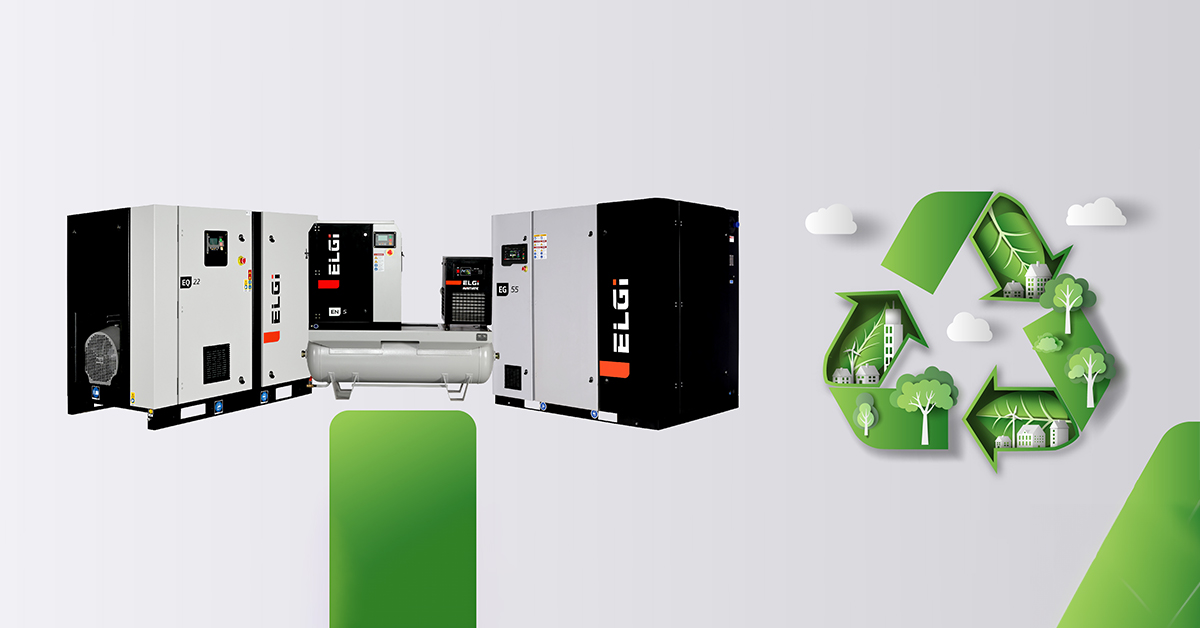
In today’s times of heightened environmental consciousness among businesses, the significance of sustainable recycling practices is on the rise as a crucial measure to prevent environmental degradation. At the heart of recycling lie air compressors for recycling providing compressed air technologies that drive a multitude of processes in the recycling industry. This blog talks about the indispensable role of ELGi industrial air compressors in sustainable recycling practices, throwing light on its contributions including energy efficiency, resource optimisation, and cost savings. Air compressors for the recycling industry show how compressed air technologies pave the way for a more sustainable future.
Compressed Air in Waste Management and Waste Recycling
ELGi is one of the most renowned air compressor companies whose electric industrial air compressors power various processes that contribute to efficiency, sustainability, and the overall effectiveness of recycling operations. Here are some critical applications of compressed air systems in recycling industries-
Material Sorting and Processing
ELGi’s powerful air compressors power conveyor belts, chutes, and other equipment that transport recyclable materials, facilitating the separation of different materials such as plastics, metals, and paper, through air classification systems.
Baling and Compaction
In the recycling industry, balers and compactors are hydraulic systems driven by air compressors that compress recyclable material to compact bales or blocks reducing their volume for transportation and processing. They help save and optimise space utilisation saving costs.
Pneumatic Conveyor Systems
Compressed air technologies are used to power conveyor systems used to transport recyclable materials such as plastics, and paper through pipelines. These systems make the process efficient, easy, and less labour-intensive without any material loss.
Air-using Sorting Technologies
Advanced recycling facilities use air classifiers to help separate materials based on their density, size, and aerodynamic properties, enhancing the accuracy and effectiveness of recycling processes.
Heat recovery systems
Some ELGi industrial compressors are equipped with heat recovery systems that capture and repurpose the heat released during compression. This heat is used for industrial purposes like space heating, water heating, etc thus improving the overall energy efficiency.
Material lifting and handling
Air compressors are used to operate material handling equipment like conveyor systems, balers, compactors, forklifts, shredders, granulators, etc for handling large volumes of waste in recycling centres.
Water treatment processes
Air compressors are critical for water treatment plants where compressed air is used in water treatment processes like aeration during sewage and effluent treatment.
Summing up, air compressors play a critical role in promoting sustainable recycling practices by powering essential processes, optimising energy use, and minimising waste generation in recycling processes. But, the key here is to integrate energy efficient air compressor systems having compressed air technologies into recycling facilities that contribute to sustainable practices.
Why is an energy efficient air compressor crucial to sustainable recycling?
An energy efficient compressed air technology is critical in the functioning of any waste recycling industry. Industrial air compressors optimise the functioning of waste recycling facilities by powering processes like material handling and waste segregation that maximise resource recovery. Further elaborating the reasons why an energy efficient air compressor is essential is as follows-
Reduce Energy Consumption
Energy efficient electric air compressors consume less electricity to produce the same amount of compressed air as compared to conventional models. Less energy consumption leads to minimising carbon footprint for recycling and promotes overall sustainability.
Lower Operating Costs
Recycling facilities can significantly reduce operating costs by improving efficiency and making the processes more economical. ELGi’s energy efficient air compressor systems help optimise energy consumption and ensure maximum cost savings.
Impact on Environment
ELGi air compressors use energy more efficiently, reducing the carbon footprint and contributing to environmental conservation. Lesser energy utilisation means fewer greenhouse gas emissions involved in electricity generation.
Optimise Resource Utilisation
Energy-efficient compressors optimise the use of electricity to generate compressed air, ensuring that resources are utilised efficiently throughout the recycling process.
Enhanced Reliability and Longevity
Energy-efficient air compressors are often equipped with advanced features like variable speed drives (VSD), and smart controls that optimise compressor operation based on demand. These features enhance reliability and longevity by reducing downtime and maintenance needs.
Competitive Advantage
Recycling units that employ energy efficient systems and processes always have a competitive advantage over other conventional recycling units.
Long-term Sustainability
The use of energy efficient air compressors helps in resource optimisation and reduces environmental impact. ELGi’s compressed air technology is best adapted to changing economic and environmental landscapes, thus contributing to long-term sustainability.
Conclusion
Overall, investing in energy-efficient compressed air technology for the recycling industry is crucial in advancing sustainability in recycling centres and contributing to a greener future. Air compressors contribute to sustainable recycling practices by improving operational productivity and ensuring environmental compliance.
ELGi’s oil lubricated compressors are used by recycling companies worldwide for their high efficiency, reliability, and low operational costs. They are the most efficient air compressors for recycling that promote sustainable practices catering to the recycling industry.
Similar topics
The Right Air Compressor Setup for Workshops, Tools & Repair Stations
Ever had a workshop day where tools suddenly feel off? The impact wrench hits softer. Th...
8 min read 
Oil-Injected vs Oil-Free Screw Air Compressor – How to Choose for Industrial Loads
When a plant runs three shifts, compressed air quietly controls how smoothly production ...
8 min read 
5 Technical Parameters To Compare Between Leading Screw Compressor Manufacturers
Choosing the right screw air compressor can often feel like stepping into a candy store ...
8 min read 
Screw Air Compressor vs Piston Compressor: Which Setup Fits Continuous Duty Cycles?
What happens when your production floor needs compressed air that never stops flowing? ...
7 min read 
Reciprocating Compressors: Working Principles, Components & Use Cases
A practical guide to reciprocating compressors, explaining how they work, their key comp...
9 min read 
Air Compressor Troubleshooting: A Comprehensive Guide to Rapid Problem Resolution
In modern industrial operations, compressed air systems function as critical utilities t...
8 min read 
A Maintenance Manager’s Guide to Making the Right Compressor Decision
When one call sets your uptime, spend, and risk profile Every maintenance leader meet...
2 min read 
The Efficiency Paradox and Customer Expectations in Compressed Air: Not Only a “Pressure” Matter
About the whitepaper In many industrial facilities, increasing operating pressure is se...
3 min read 
Direct Expansion Refrigerated Dryers: Preventing Costly Downtime with Proven Moisture Control Technology
Maximising efficiency and reliability in compressed air applications by converting untre...
8 min read 
Exploring Water-Injected Screw Technology for Reliable Oil-Free Compressed Air
Oil-free compressed air is central to quality and safety across pharma, food, beverage, an...
2 min read